
Bulwell is officially protected by law as 'conservation area' of particular value
Everyone has an opinion on Nottingham – and Bulwell for that matter.
Some love it and some don’t, some live here for their entire lives whilr others get out while they can.

But what’s definitely true is that Nottingham is home to a huge, diverse mix of people, living in a huge, diverse mix of areas.
And some of it is particularly special.
Nottingham City Council has defined 33 parts of the city as being of particular value – and Bulwell is one of them.
They are known as ‘conservation areas’ – described by Historic England as an ‘area of special architectural or historic interest’.
These are places where building or making alterations requires specific permission and any new development or changes must ‘preserve or enhance’ the area.
Some of Nottingham’s conservation areas are obvious, such as Wollaton Park, Nottingham Station with its grand architecture, Nottingham Castle and the Park estate.
But plenty of people are unaware that Bulwell is also included on that list.
Bulwell dates back to around 800 AD and its market, which is still held in the centre on Tuesdays, Wednesdays, Fridays and Saturdays, has been taking place – in that very same spot – for around 1,000 years.
First a village, Bulwell eventually became its own town and at its core are located a number of immaculately designed 1800s buildings, with some made out of local magnesium limestone – now known as Bulwell Stone.
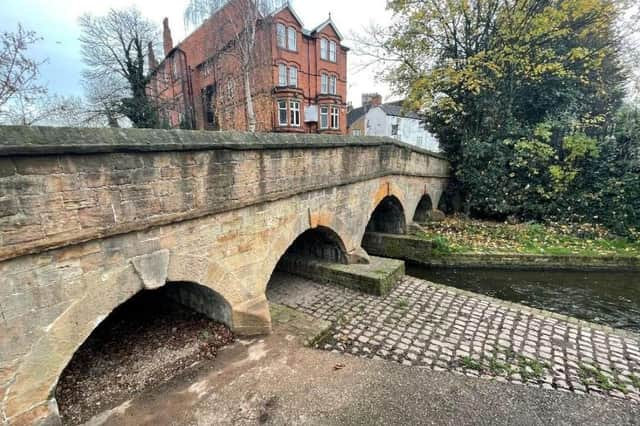
The conservation area covers parts such as the Market Place and its buildings as well as Bulwell Bogs park, which contains two Grade II-listed bridges over the River Leen, and the Riverside building in the south.
Northwards, the area extends up as far as Carey Road due to buildings such as St Mary’s Primary School, the house at 202 Main Street, the old Methodist Church and three old pubs – the Three Crowns, Scots Grey and Framesmith’s Arms.
To the west the area includes Thames Street and Mersey Street off Commercial Road and buildings such as the 1667-dated Strelley House – a purpose-built school – and other terraced homes.
And in the east, the trees around the tower and churchyard of St Mary’s Church, and the building work itself, including the old town hall and library, are part of the protected site.