
I headed down to White Post Farm to gain this fascinating insight into how nature's production line creates honey

Not many of us will be pondering how honey is made while we spread this tasty treat on our toast.
It’s a fascinating process though with a complex work structure operating inside the hive that wouldn’t be out of place in any office.
It’s also a system which most of us are likely not to have given a second thought about and one that few of us will understand.
Bee lover Freya Holt, however, is not one of those people and is someone who knows the working of the hive inside out.
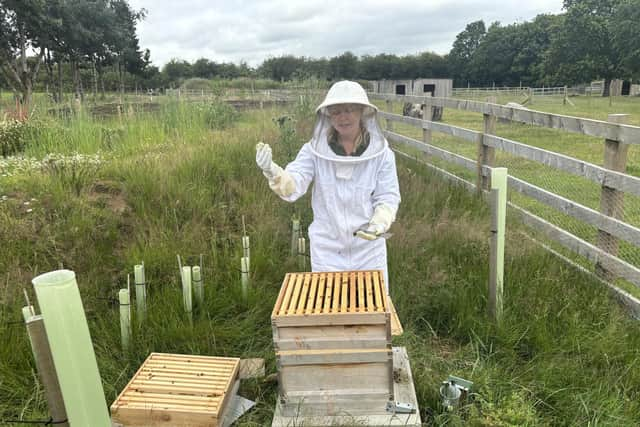

That is because she is one of the farm supervisors at White Post Farm over in Farnsfield, where Freya runs the attraction’s popular Beekeeping Experience.
These well-loved sessions have been running for two years and involve the very knowledgeable Freya explaining the intricacies of a hive structure and allowing visitors to get up close and personal.
“There are around 60,000 bees in a hive in peak summer which drops down to about 20,000 in the winter,” she explains.
“In a bee hive there is a queen who lays all the eggs, the drones whose only job is to mate with the queen, and the worker bees which are unfertilized females who go out collect the pollen and feed the young, the drones and the queen.
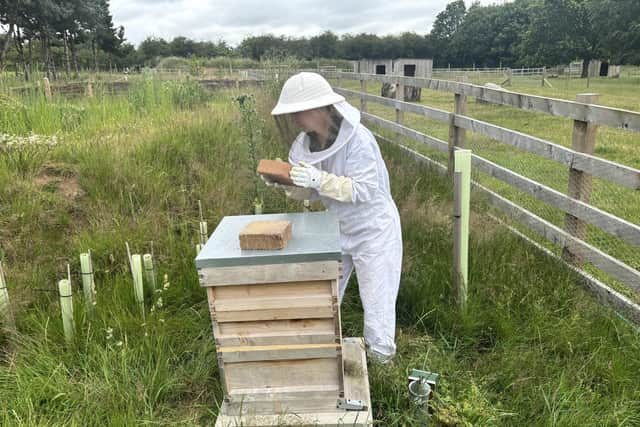
“The bottom box is a brood body, where the brood lives and where the queen’s eggs are laid. The top two boxes are where the honey is stored, with the queen kept in the brood body and away from the honey.
“There’s a real purpose to the hive. As the worker bees get older their job roles change, so when they are first born their job is to look after the brood and the babies. As they get a little older they will eventually go out and get pollen. They just change to different job roles as they get older.”
Managing a complex hive naturally comes with a number of problems with Freya and her team gaining the knowledge they need from nearby beekeeper David Bell.
“We still message him if we are struggling. Every year is different so it all depends on the weather as to what they do,” explains Freya.
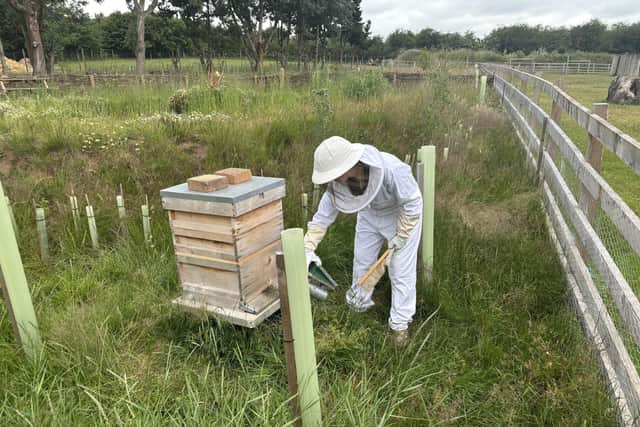
“Last year we had lots of sunshine, so we had lots of swarms at the start of the year. The hive essentially got too many bees in it and they split. You get a lot of swarms. However towards the end of the season we didn't actually have any honey because there wasn’t enough to bring back. They were feeding themselves rather than making a surplus for us to take. This year it has been up and down.
“You learn as you go along. People are still learning. We keep in the know because everything is changing and there are different threats and different diseases so we try to keep in the loop.”
As well as different weather conditions impacting production levels, the surrounding environment can also affect how the honey eventually tastes.
“Depending on where you have your bee hives, throughout the different seasons, their honey flavours will change,” adds Freya.
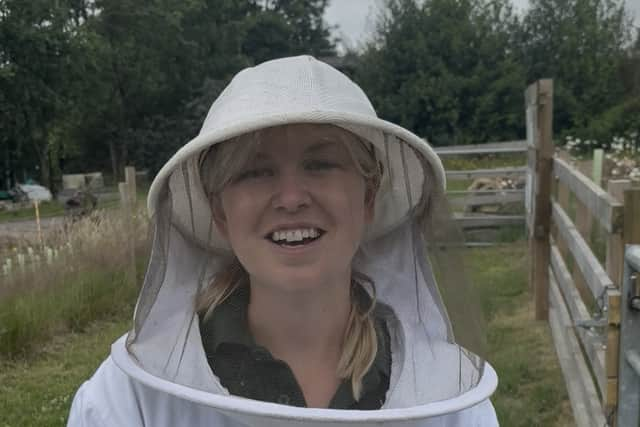
“Our honey is from beech trees, so we have tested what pollen is actually in the honey. They mainly get their source of pollen from trees.
“In the different seasons that may change, you might get different types of trees, you might get heather honey or lavender honey, it just changes depending on what their nearest resource is.
“A lot of the honey you do buy from supermarkets isn’t actually proper honey. Proper honey is brilliant for you if you have got burns, a cough or a cold, it’s brilliant. A lot more people are starting to use it as natural remedies.
“One honey bees does not make very much honey, I think it's a quarter of a teaspoon, so they have got to work hard for us to take it off them.
“When it is available we do sell it down at the gift shop. There’s nothing better than pure honey.”
For further information on this experience visit https://whitepostfarm.co.uk/animal-encounters