
Nottinghamshire officer opens up about her experiences as a black woman in policing
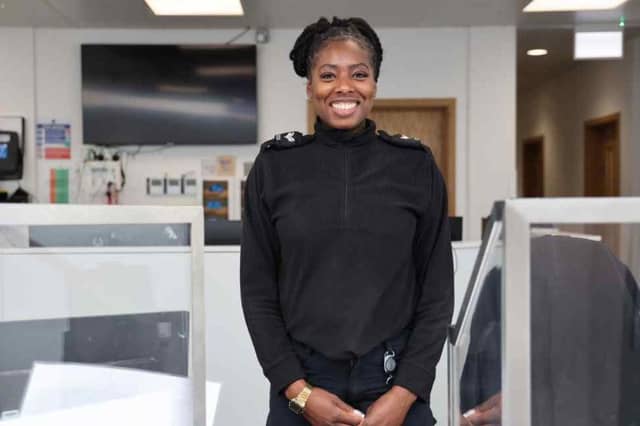

Sergeant Kayley Ewers is regularly the first face a suspect sees after they're brought into Nottingham Custody Suite.
Coming in having just been arrested, however, the individuals are rarely happy to see her and often ‘don't want to be there’.
The abuse that occasionally then follows is a sad indictment of the painful reality Sgt Ewers and other black women in policing sometimes face.
She said: “I’m subjected to racial abuse probably a couple of times a month.
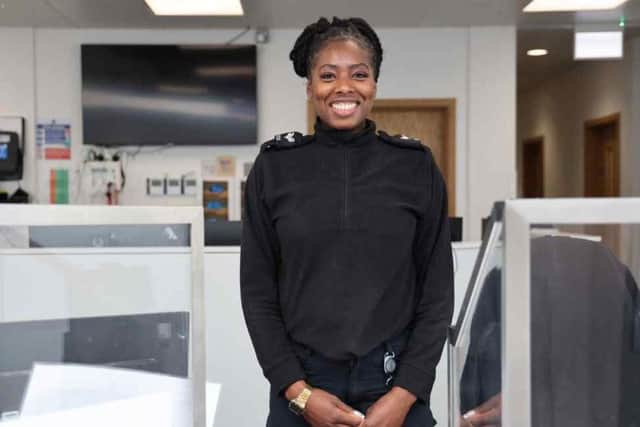
“It’s hurtful because I’m doing the same job as every other sergeant here, but I get picked on because of the colour of my skin.”
By her own admission, Sgt Ewers often deals with people when they're at their angriest, with her role therefore demanding composure in tense moments.
But anger in the moment, she insists, is no excuse whatsoever for the racist vitriol she's endured.
She continued: “Being called fat or ugly, whilst upsetting, is a personal insult.
"Racism is broader than that and more deep-rooted, with a long history of discrimination.”
She adds that, although some offenders later apologise after their outbursts and claim they're ‘not racist’, the damage from what they've said sadly lingers.
She said: "You do have to have a thick skin in this job, but it's not something anyone should have to get used to – and I don't think I ever will."
Sgt Ewers, who joined Nottinghamshire Police 11 years ago, grew up in Cambridgeshire, with no negative experiences of law enforcement.
Yet she admits she's acutely aware of the distrust some black communities feel towards the police – with the officer feeling the sting of that scepticism first-hand.
She recalled: “When I was out on the streets working in response, I’d get a lot of abuse from the black community, saying ‘you’re a traitor, you’re this, you’re that'.
“Being a black police officer is always going to be challenging, especially if you’re a woman.
"Society sadly doesn’t always seem to respect black women in positions of authority.”
She explains that she's found the disrespect to often be subtle but unmistakable to her, adding:
She said: “Some people come in and say, 'I’m not talking to her’, but they won’t say why.
"You just know why they're saying that though.”
Despite these challenges, Sgt Ewers remains committed to change, and wants to see more Black women in policing—especially in leadership roles.
She said: “The more we represent ourselves, the more others will feel encouraged to go for those roles.
"It also shows the community that we’re here to support them.”
Improving trust and confidence between the police and black communities is a cornerstone of the national Police Race Action Plan, which Nottinghamshire Police signed in 2022.
Since then, the force has launched several initiatives aimed at bridging divides.
One such effort involves church pastors visiting Nottingham custody suite to offer support to young black adults, as part of a partnership with the Majority Black-Led Churches across Nottingham.
Sgt Ewers has seen the impact of these interactions first-hand.
She continued: “I’m religious and a Christian myself, so I think the concept is good.
"Young Black males could really benefit from that kind of support.”
She also believes the Police Race Action Plan is another positive step in the right direction, adding: “It’s easy to talk about and hard to actually do, but all this work can only be a positive thing.”
Sgt Ewers agreed to share her experiences as part of Black History Month and for Hate Crime Awareness Week, which runs from October 11-18.
And while reflecting on the importance of visibility and education, the officer — who is of Jamaican heritage — adds she hopes for a future where black history isn't separated.
She said: “I see the positives of Black History Month— it’s like every year we’re saying, this is important enough to give it a whole month.
"But there’s a phrase that black history is British history, and I believe that.
"When I was at school, the little bit we learned was mostly about slavery, but so many black people have done amazing things that most people don’t know about.
“Hopefully one day, it won’t be separated.
"Children will just be learning about this person or that person who invented something or changed the world—whether they’re black, white, or whatever.”