
Bulwell-based health trust questioned if it has resources and money to improve after Nottingham attacks
The NHS trust that provides mental health services across Nottinghamshire has been questioned as to whether it has the resources and money to make improvements following the Nottingham attacks.
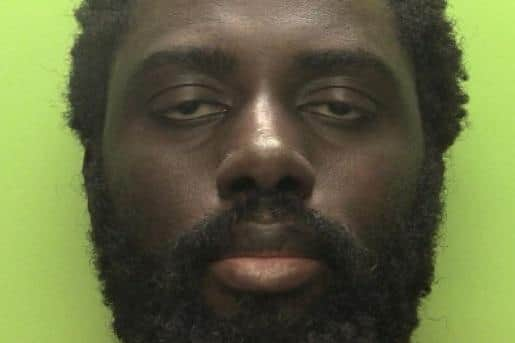
Valdo Calocane, who was diagnosed with paranoid schizophrenia in 2020, was discharged from the care of Nottinghamshire Healthcare NHS Foundation Trust a matter of months before he killed three people in June 2023.
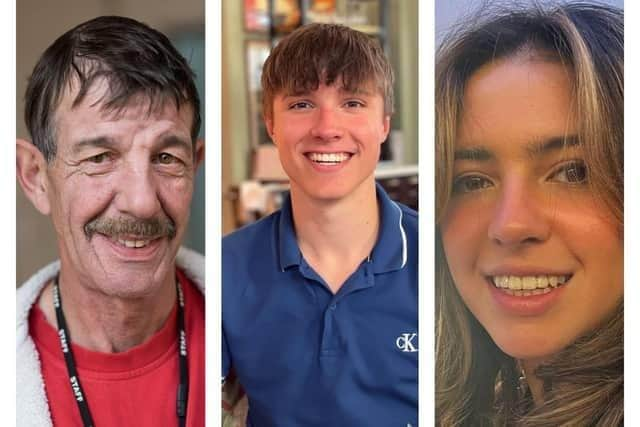
Calocane, now 34, killed Barnaby Webber, Grace O’Malley-Kumar and former Bulwell Academy caretaker Ian Coates on June 13, before attempting to run down survivors Wayne Birkett, Sharon Miller and Marcin Gawronski with Mr Coates’ van.
The trust – which is based at Highbury Hospital in Bulwell – faced scrutiny at a public inquiry earlier this year.

Northumbria Police, acting on behalf of Nottinghamshire Police, has since informed the trust that it is under criminal investigation for potential corporate manslaughter.
The trust has now refreshed its strategy as a result of its failings, and this was discussed at a Nottingham City Council health meeting on July 23.
Its refreshed strategy says it will aim to put patients first with joined-up care, while staff will be made to feel safe and supported with compassionate leadership.
Craig Sharples, chief of staff at the trust, told councillors the strategy “was about listening” to both colleagues and patients.
Coun Nick Raine (Lab) questioned how the culture would be changed to create a listening environment, and if the trust had the resources to put in place improvements.
He said: “We’ve had a national tragedy which has had national attention in terms of a mentally unwell individual who then murdered three people, which is awful for our city and an appalling tragedy.
“Do you actually have the resources and money to actually deliver this strategy effectively?”
Mr Sharples said: “I echo what you said around the tragedy.

“This is about how we learn from what happened in the past and how we move forward to ensure the safety and quality of our services our residents receive are of the highest order.
“In terms of our culture the inquiry remains ongoing, but the Care Quality Commission (CQC) has been very clear with us in terms of what our staff have said and how our staff feel.
“We are listening to that and that has informed this strategy.
"But the old adage, ‘culture eats strategy for breakfast’, there is an awful lot of work we need to do across our organisation to listen and hear what our staff say, how they feel, how we create an environment where they are able to provide their best quality care.
"That is a fundamental tenet of this strategy.
“Have we got enough money and resources?
"Has anybody at the moment in terms of where we are at in the public sector?
“One of the core drivers around this strategy is around sustainability, and how we provide the most effective and productive systems and processes that translate into the best quality of care with the money available to us.
“Would we like some more money, of course, but we are very clear we have got to work within our means.”
To refresh its strategy, the trust says it has spoken to 60 patients, carers and family members, as well as more than 1,000 of its colleagues and 18 external partners.
However, Coun Saj Ahmad (Lab), who has worked for the NHS for nearly a decade, said: “To me that is a very small number of patients to speak to in relation to something that is ultimately about patients.”
Paula Vaughan, deputy director of planning and partnerships at the trust, added: “In terms of the number you are right, it is not high.
"I think you might have missed in my presentation which talks about the speed in which we have done the refresh – it was over a course of weeks not months, it was a refresh not a rewrite.
“You are right about the number of 60, I brought it up at the time that it wasn’t as high as we’d like.”
She added that the conversations with the individuals had been ‘very rich, helpful, and very honest’.
The trust said its future work would be about making the culture safer, in a bid to create an environment that allows more people to be heard and come forward with their concerns.