
Nottingham City Council commissioners on track for February exit
Government officials who are being paid up to £1,200 per day to oversee improvements at Nottingham City Council, are on track to finish their work early next year.
The team of commissioners was first sent in to monitor critical changes at the Labour-run council in February last year, just months after it was declared effective bankrupt towards the end of 2023.
They have been issuing a series of progress reports ever since, and the latest was published on Friday (November 22).
The team, comprising of experts Tony McArdle, Margaret Lee, and Sharon Kemp, say they are “pleased to report that improvement continues to be made in most respects” – and a Government minister has confirmed they are still on track to finish their work in February 2026.
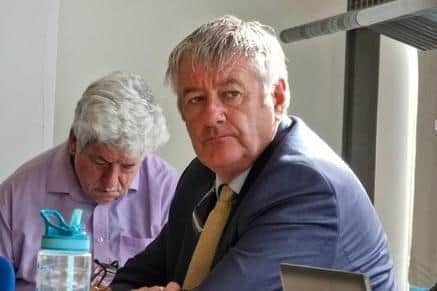

The latest update – which dates back to August – also confirmed Sharon Kemp has taken over as lead commissioner, after Mr McArdle took on a second job for the same role at the troubled Birmingham City Council in July.
However, some difficulties remain, including deep-rooted dysfunction that will take time to change.
These difficulties include “ill-tempered engagement” between officers and elected members.
“Recovery in the operation of any large organisation that has become dysfunctional takes place fitfully, as people adapt to the change,” the report says.
“This council still makes mistakes, and it will not suddenly cease doing so.
“Rather, these will lessen in scale and impact as the council steadily rebuilds itself around sound operating principles.
“Political impatience at progressing this, and the frustration displayed when things go wrong, still too often leads to a tendency to apportion blame, and for that blame to be disproportionately applied.
“This in turn is too often characterised by intemperate and sometimes ill-tempered engagement.
“This breeds a wariness amongst officers over presenting difficult news or reporting upon failures – an unhealthy characteristic which, if it persists, will put recovery at risk.”
While the Labour-led authority says its financial situation has improved significantly, and is currently anticipating to underspend by £14.6m in the current financial year, the non-delivery of improvements and savings is proving problematic.
The 2025/26 budget – the current financial year – includes savings of £39.1m, but only £26.7m have been delivered or are on-track to be delivered.
The report says that, while these problems do not appear to be negatively affecting the bottom line of the council’s finances, its situation is being sustained through “significant underspending on the employee line” through vacancies.
This means that by keeping vacancies open, and keeping employee costs lower, the actual level of savings being successfully delivered is being “masked” because these lower costs are acting as a “cushion”.
“This situation creates some behavioural issues, notably, the non-delivery of savings doesn’t cause a crisis in financial management due to this ‘cushion’, and so there is a danger that there is less emphasis placed on the delivery of transformation and continuous improvement,” the report says.
“However, it is important to note that whilst the finances are not currently threatened, particularly given the level of consolidated General Fund reserves, which stand at some £60m following a review by the [finance director], this does not necessarily mean that the budget is sustainable for the medium and longer term, nor that the council is delivering value for money.”
The commissioners’ report emphasises the council’s need to focus more on delivering its transformation programme, which will lead to fundamental service change – “representing not only lower cost but also better outcomes for citizens and businesses”.
Despite the challenges, the commissioners’ report acknowledges the progress made in risk management and audit, something which was heavily criticised in the past and led to poor decision making, including in the failed Robin Hood Energy.
So far, the commissioners say they have not formally used their powers, and have only stepped in where necessary.
“In summary, the council continues to make steady progress in delivering its Improvement Plan with growing sophistication and some early signs of a shift toward continuous improvement thinking,” the report concludes.
Local government minister Alison McGovern said she was “encouraged” by the latest report, and confirmed the commissioners “are scheduled to leave” when the existing directions end on February 22, 2026.
“Work remains to ensure the intervention can conclude as planned,” she said.
“It is encouraging that, to date, you have not found it necessary to use your formal powers or request changes to the scope or length of the intervention.
“I believe the coming months will determine whether this position can be maintained.”
City Council leader Cllr Neghat Khan (Lab) said: “Significant improvements have been made across the council including within our financial position to get our house in order and become financially stable.
“Our priority is to ensure value for money across all of our services, whilst maintaining our ambition to build a more accountable, responsive, and future-ready council. We do what we say we’re going to do. That is what our residents expect of us.
“We recognise that we must not be complacent as there is still work to do on our improvement journey.”