
Nottingham City Council plans to end reliance on emergency finance measures a year earlier than expected

Nottingham City Council is planning to end its reliance on emergency financial support measures a year sooner than expected.
The Labour-led authority’s former finance director declared it effectively bankrupt in November 2023, after it was decided a balanced budget could not be set due to a £23m overspend at the time.
However the council’s leadership now says its latest budget for 2026-27 – which begins April 1 next year – is ‘clear proof we are now a financially stable council’.
It is currently forecasting an underspend of £1m – which means it will have this amount left over once all expenditure in its day-to-day services is accounted for – and should be able to set the budget without the use of any emergency support measures.
Shortly after the ‘bankruptcy’ announcement, Government commissioners were appointed in February 2024 to oversee a ‘critical improvement journey towards financial sustainability’.
Around the same time, the Government further gave the council permission to use up to £65m in Exceptional Financial Support (EFS) to help balance its budget.
This accounting mechanism allows councils to sell property and land and use the money made for day-to-day spending, something which is not typically allowed outside of exceptional circumstances.
Around £41m was expected to have been used in 2024-25 to help the authority set a balanced budget, but it ended up only needing £7.7m.
The current year’s budget – 2025-26 – was set using £20.8m in exceptional financial support.
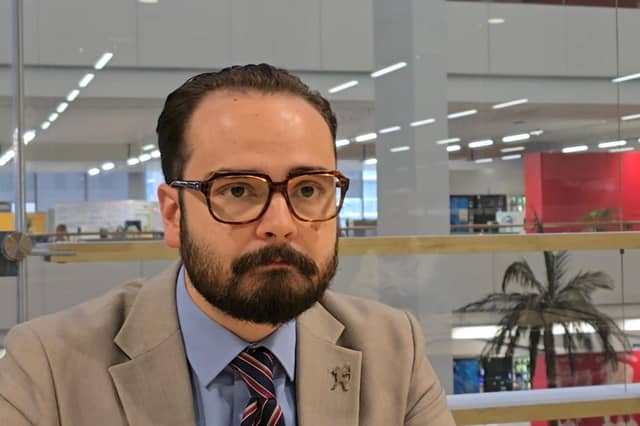
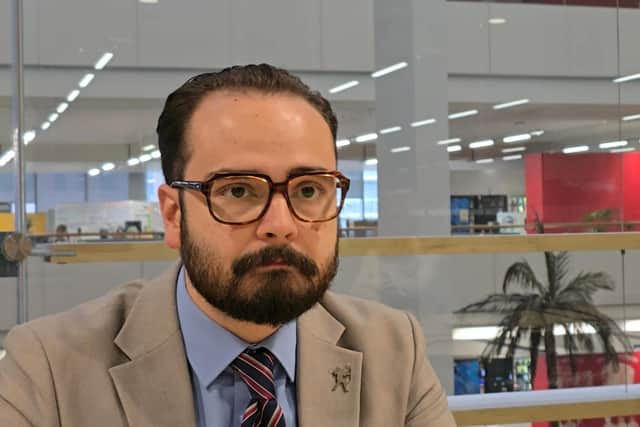
Bulwell councillor Ethan Radford, deputy leader and executive member for finance, said the authority has managed to work towards setting the 2026-27 budget without it – a year earlier than it had planned to be able to do so.
The budget, which must be set by March next year, has been drafted on the proviso that council tax will again rise by the maximum allowed amount of 4.99 per cent.
Coun Radford also said the team of three commissioners have been helpful, and anticipates they are on track to finish their intervention work by February next year.
He continued: “After 14 years of austerity from the Conservative Government – and with the intervention taking place during that Government in their last days – it was probably inevitable that a city like Nottingham would have found itself with commissioners at some point.
“I think it probably accelerated the process of us getting our house in order, but I am confident we would have got there either way.
“There will always be bumps and sustainability is something all councils strive for.
"For us, the budget we have put forward, we have been somewhat pessimistic in our forecasting, so we are predicting an underspend of £1m in the budget.
"What that means is if there are bumps and things that pop up, we will have a certain amount of wiggle room to be able to deal with them.”
While the council is expecting a £1m underspend next year, a £3.3m underspend in 2027-28, and a £3.2m underspend in 2028-29, the financial outlook suggests a budget gap of £14.8m may open up by 2029-30.
The council is planning almost £11.5m in cuts this year, and £12.2m over the next four years.
One of the largest savings – more than £2.4m and £3.4m over the next four years – will be made in children’s services.
The authority says it will look to move children from high-cost placements to lower-cost foster care or independent homes.
Some of the other savings include a review of pricing for social care packages and placements, service efficiencies in leisure, and a review of workplace parking levy charges for council staff.
Coun Radford says £15m will also be invested in frontline services – which he says proves the organisation is ‘becoming a renewed council that delivers for local people’.
This investment is being spent on more neighbourhood safety officers, playground inspectors and park rangers, and enhanced street cleaning.
Coun Radford also says £183,000 will go towards community grants for each of the 20 wards across the city, so local councillors can support activities in their areas.
It comes after councillors’ ward budgets were slashed under previous cuts.
He said the improved financial outlook is down to ‘more accurate forecasting and more accurate financial monitoring’.
He said: “Part of it is because we have been getting our house in order.
“We are a huge organisation that handles vast sums of money, and handling it better and being more efficient in the way we are handling it – and realigning pots of money to the priorities we want to see delivered goes a long way.”
While the council says it is not legally required to consult the public on its planned savings, unlike previous years, an ‘improved engagement exercise' will still be held.
Some councillors have said there has been a lack of transparency stemming from ‘abstract’ language in consultations, as well as documents being presented to members with little time for proper scrutiny.
The engagement exercise over the budget will therefore be more understandable, held for a longer period of time and not over the Christmas period.
It will begin on October 21 and run until December 2.
However one opposition councillor fears residents in the city have low confidence following a number of poorly put together consultations in the past, and will struggle to trust the authority.
Coun Shuguftah Quddoos (Green) said: “After two years of cuts, people’s trust in the council is extremely low.
“The question is, in the absence of a legal process of formal consultation, can the council be trusted to act on this informal listening exercise?”