
Nottingham city facing £80m backlog in road repairs
Nottingham has a road repairs backlog totalling almost £80m, the latest figures show.
The city has 767km of roads, 1,442km of footways, more than 200 bridges, 33,329 street lights, and 37,349 road gullies, that must all be maintained.
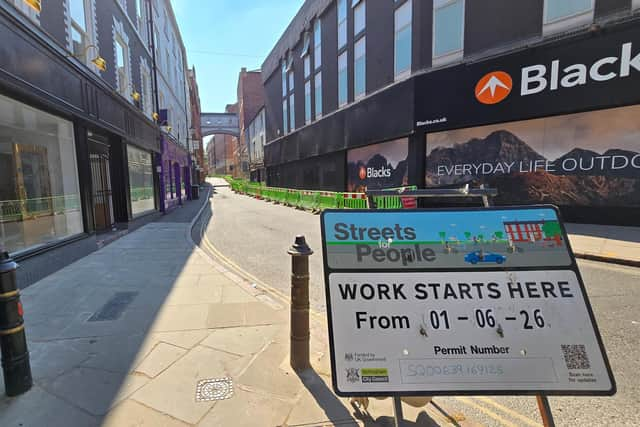

However, the Labour-run city council says decades of cuts to council budgets under the former Conservative Government’s austerity measures have left many roads neglected.
During a meeting to discuss the city’s roads on July 20, Coun Kirsty L Jones (NPA) said: “I’m just disappointed our roads, over the last decade of austerity, have obviously been neglected, and have declined to such a drastic condition that we have this backlog.
“I just hope there is more funding.
"It sounds like Nottingham City Council is in a good place in terms of the knowledge, if more funding was to come, to actually meet that backlog.
"But it is clear Nottingham is not getting the investment it needs.”
Chris Keane, assistant director of highways and public realm, said the city needs just over £9m each year in funding to keep on top of the backlog.
He said: “No council is ever going to get rid of their backlog.
"What you have got to do is reduce your backlog.
"That has got to be the driver and you’ve got to keep spending money to reduce your backlog.”
According to council data, for 2026-27, the city will be getting £5.77m from the East Midlands Combined County Authority, and an estimated £1.8m directly from the Government’s Streets for People pot, leaving a shortfall of £1.58m against what is needed.
However, based on current funding awards it is expected that, by 2028-29, funding will hit was is needed for a steady maintenance plan.
Despite the current shortfall, Mr Keane said the council is in a ‘really good position’ in terms of funding to keep on top of repairs.
He added: “We could all spend more, but the current trajectory here is that we are ahead of that curve and that is positive news.”
Road repairs are typically done depending on the severity of damage and the risks they pose.
Emergency works, where they is potential for serious risk or major disruption, must be done within two hours.
Urgent works must then be done in 36 hours, while other safety defects of lesser risk must be tended to between 14 and 28 days.
The council says that between April 1, 2025 and March 31, 2026, there were 235 damage claims.
However, just nine per cent of these claims were successful, and the total amount of money the council had to pay out totalled just £8,246.17 last year.
Coun Sarita-Marie Rehman-Wall (Lab) said: “For what reasons are highways claims against the council successful, and what can be done that these road maintenance issues are addressed in the future so they don’t give rise to claims?”
Mr Keane replied: “The reason why we would pay out claims would be that we didn’t get the work done on time, or that we’d walked down the road and done an inspection, there was a big hole in that road and we missed it, that would be another reason.”
Colin Parr, corporate director for communities, environment and resident services, added: “We are in a positive place.
"My previous authority has got a network about twice the size of our network, the backlog was about £320m at the point I left.
"It is not unusual for authorities to be reporting backlogs in the hundreds of millions.”
However he said the council had been clever in where it invests money, varying between main arterial routes and the neighbourhoods, leading to a more manageable position.