
Three lesser-known problems that could be catastrophic for Nottingham City Council – and wider country
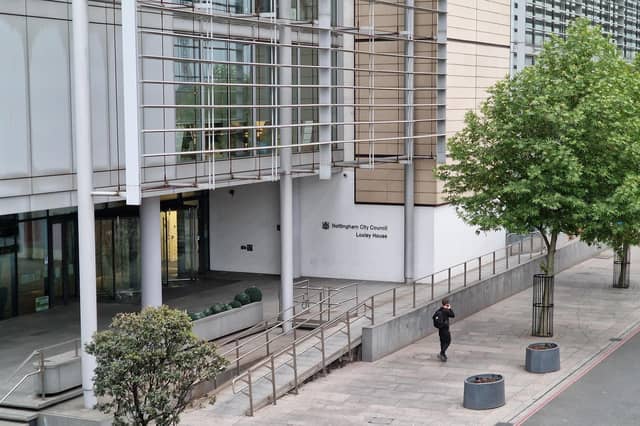

Some of the challenges facing Nottingham City Council and wider local government are well-documented, from the collapse of Robin Hood Energy to a decline in Government funding in favour of council tax hikes.
However, a number of lesser known problems could prove catastrophic should they sit unresolved.
Back in November 2023, the council declared itself effectively bankrupt through the issuing of what’s known as a Section 114 notice – after it was decided, in the opinion of the finance boss at the time, a balanced budget could not be set.
The very same year councils in Birmingham and Woking did the same, following Thurrock and Croydon in 2022 – and half of al local authorities have warned of effective bankruptcy within five years without reform.
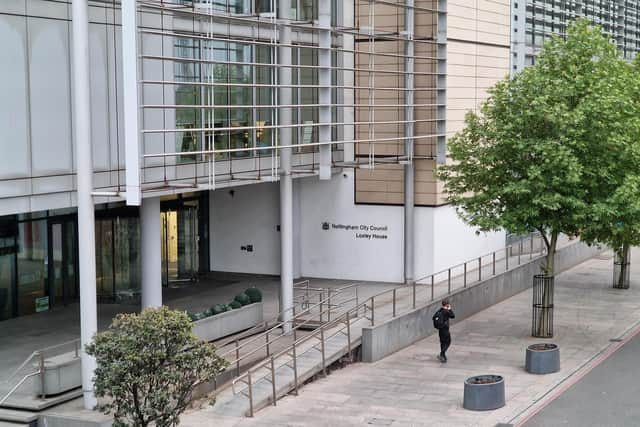
A number of these councils have indeed had their own internal – and political – disasters that cannot be downplayed.
The collapse of council-run Robin Hood Energy has been widely cited as one of the reasons for the Nottingham’s financial woes, for example, having cost taxpayers tens of millions of pounds.
But at the same time the wider picture of local government funding has been bleak, with over a decade of cuts under the Conservative and Liberal Democrat coalition Government’s austerity measures – which favoured local council tax hikes over grants.
A cocktail of financial turmoil has been the result for most councils across the country and, while these are some of the most widely reported problems, they do not paint the finer details of a very complex picture/
1. The outsourcing of local public audit has been ‘an unmitigated disaster’
Eric Pickles was the Conservative Secretary of State for Local Government in the Conservative-Liberal Democrat coalition Government in 2010.
Soon into his appointment, Mr Pickles began touting the abolition of the Audit Commission – the independent public corporation that oversaw local audits.
It also had secondary – and somewhat more contentious – objectives in providing a national research function for local public bodies and the co-ordination of performance management systems for councils, NHS Trusts, and the police and fire services.
While local government audit typically (and perhaps understandably) fails to pique the interest of the wider public, it is absolutely vital in making sure public money is being managed correctly.
Not only that, it can also act as an early-warning indicator for financial distress.
But Mr Pickles soon achieved his goal of abolishing it.
A press release published by the Government in March 2014 said the move would “save over £1 billion and deliver coalition pledge to reduce bureaucratic public bodies”.
Its closure came despite it being considered as one of the most successful regulators, inspectors and improvement agencies in the recent history of British government, according to a report from the Institute for Government.
It had been set up in 1983 by Michael Heseltine at a time of widespread worry about the quality of public services and councils.
Former Conservative MP Richard Bacon, a member of the pre-legislative scrutiny committee at the time, said: “The central criticism of the Audit Commission seems to be that it was a very good idea, but it got top heavy, burdensome and bureaucratic.
"There was, I think, a quite widespread view that it had started to lose its way.”
Following its abolition, public audit was outsourced to the few private firms that had the resources to conduct such a significant task.
While concerns had been raised at the time, they became very apparent in 2018 when the Government appointed consultants to look at the decision.
The same year the Institute of Chartered Accountants in England and Wales (ICAEW) published an independent review highlighting a widening gap between what the system was supposed to do and what it actually did.
In response the Government set up the 2019 independent Redmond Review which reported in 2020 the system was ‘no longer fit for purpose’, and 34 recommendations were made for the content and conduct of the audits and included changes to the audit market and to the leadership and governance of the system.
Peter Murphy is a professor in public policy and management, and director of the public policy and management research group at NTU’s Nottingham Business School.
Before this, he worked as a senior civil servant in four Whitehall departments and spent 23 years in local government, most recently as chief executive and emergency planning officer at Melton Council.
He said: “It is widely accepted that the outsourcing of local public audit has been an unmitigated disaster.
“Local audit is the foundation of accountability and assurance.
"If we can’t trust the figures – and we cant since 2015 – then trust in accountability and assurance is undermined.
“The last three Conservative administrations agreed immediately with recommendations for content and conduct of the audits but not the leadership and governance of the system.
“As a result – and despite the urging of the select committees, auditors, local authorities, professional and assurance bodies – only minor changes were made, as the key stuff requires primary legislation.”
Since the Audit Commission’s abolition, a significant backlog in local government audits has built up.
The backlogs in firms’ audits of England’s 426 local authorities have become so severe the National Audit Office (NAO) disclaimed the Whole of Government Accounts (WGA) in 2022-23 for the first time in history.
The WGA is a vital tool in the management and scrutiny of public spending, as it brings together all public sector assets and liabilities.
The disclaimer means there is no assurance because private audit firms have been unable to fully review the accounts of councils and other public bodies in time.
Nottingham City Council’s accounts have also been signed off with no assurance from its external audit firm, Grant Thornton, which is charging the council hundreds of thousands of pounds for the work.
The Public Sector Audit Appointments (PSAA) – which appoints auditors to councils and sets the charges – just recently announced it was increasing the fees charged to the council to £645,000.
This fee will again be paid to Grant Thornton, having been reappointed as the council’s auditor for the period between 2023-24 and 2027-28.
The PSAA says the fees ‘reflect both the increased work auditors must now undertake as well as the scarcity of audit firms willing to do this work’.
Councillors in the city have raised serious concerns over value for money for local taxpayers, with such significant costs being charged despite years of unqualified audit opinions.
Prof Murphy added: “The previous Government in 2023 and 2024 said it would deal with it after the election if it was re-elected, but this didn’t happen, and basically the current Government is picking it up.
“It is 10 years overdue.”
In response, the current Government has now set a series of statutory backstop dates to clear the backlog and allow the system to recover, meaning the accounts of a vast number of public sector organisations will be finalised and passed off despite not being fully reviewed.
What happens next is but a matter of speculation.
2. Special Educational Needs and Disabilities (SEND) are on ‘a financial cliff edge’
Since reforms were made to the Children and Families Act 2014, the number of children and young people with an Education, Health and Care plan (EHCP), which details the support a child is entitled to, has risen by 140 per cent from 240,183 in 2014-15 to 575,973 in 2023-24, according to Government figures.
EHCPs give children and young people up to the age of 25 the legal right to support from councils.
Support can be for autism spectrum disorder, social, emotional and mental health needs, as well as speech, language and communication needs.
Figures from the Department for Education further reveal that nearly one in five pupils in England now live with special educational needs.
On top of the children on EHCPs, a further 1.28m pupils not on a plan also require some form of special educational needs support.
These significant increases have left councils with huge costs – and there is no permanent solution to address the problem.
The temporary solution is that since 2019 councils have been able to keep these mounting deficits off their main accounts using what’s known as a ‘statutory override’.
This has allowed councils to ignore the widening deficits when balancing their budgets each year.
Nottingham City Council says its financial reserves for children with SEND are dwindling, with ‘significant overspending’ due to soaring demand.
Council reserves could now fall into a £601,000 deficit in the financial year beginning April 2027, before worsening to £15.2m by 2030.
While it has managed to cut the expected deficit down from £20m through an improvement plan, the figure remains eye-watering.
But Nottingham’s situation is less severe than some councils.
Hampshire County Council has England’s largest cumulative SEND deficit, which is expected to hit £312m next year.
According to the County Councils Network (CCN) the deficits have grown to almost £6 billion nationally – and are projected to reach £3 billion next March for the county and unitary councils the organisation covers.
The CCN warned councils faced a ‘financial cliff edge’ when the statutory override was due to end in March 2026, but the Labour Government extended this to March 2028 – avoiding what was described as ‘an immediate catastrophe’ that could have plunged councils into bankruptcy.
A long-term, sustainable solution is yet to be detailed, but ministers confirmed in June they will publish a White Paper in the autumn.
3. NHS cuts will have ‘huge implications’ for councils – and patients and their families
The NHS in Nottingham and Nottinghamshire is facing a significant financial challenge due to rising service demand, inflationary pressures, and increased operational costs across the system.
In response the Integrated Care Board (ICB), which commissions services across the city and county, has already made £252m in savings across the system in Nottingham and Nottinghamshire in the 2024-25 financial year.
This financial year, which began in April, the ICB is planning a further £282m in savings.
The ICB said: “We are committed to meeting our financial duties in a manner that minimises – but cannot entirely rule out – the need for front line service changes and maximises efficiency, productivity, strong financial governance and control.”
Such widespread cuts have left councillors immensely concerned that local authorities will simply be left to pick up the pieces once the dust settles.
Coun Georgia Power (Lab), the chair of the city’s health scrutiny committee, said the cuts will have ‘huge implications’ for the council.
She continued: “What worries me most is the impact on patients and families.
“The public sector only works if it works together.
"We need a properly joined-up approach between health and social care to stop people falling through the cracks.
“The focus must be on outcomes for residents, not arguments about who pays for what.”
She added that whhat made things worse was that many of the cuts are vague and the ICB is yet to explain how they will be made.
The largest anticipated saving for the current financial year is around £78m in ‘core services’, followed by £41.5m anticipated savings in the area’s workforce.
Some specific changes have been outlined, including trying to reduce patients taking more than 10 medications a day, conducting a medication review, and decreasing repeat prescription items by one per cent in a pilot GP practice.
However, the ICB’s other aims are more vague.
One line from a report published in June said: “Dispose of assets across the system to reduce operating costs and backlog maintenance liabilities.”
Coun Power continued: “This is taxpayers’ money, and the public deserves to know how it’s being spent.
“We’ve been asking the ICB for over a year to explain what these changes actually mean for Nottingham.
“I’m deeply concerned by the speed this is being pushed through and the total lack of public accountability.
"I agree the NHS isn’t fit for purpose after more than a decade of Conservative mismanagement – but it deserves more than quick fixes and undisclosed cuts.
"It needs a long term, credible plan built on honesty, transparency, and a genuine commitment to getting it right.”