
Bulwell councillor who fostered Afghan refugee says Nottingham in need of 100 new carers
A Nottingham city councillor who has fostered children herself says the city is in need of at least 100 new carers.
Coun Cheryl Barnard (Lab), who represents Bulwell Forest, says the long-term impact of the Covid pandemic has ‘proven a challenge’ for fostering.
Many carers were left feeling they could not continue, while others passed away due to the virus, and at the same time the number of children in need of a foster carer increased.
Coun Barnard described it as the ‘perfect storm’.
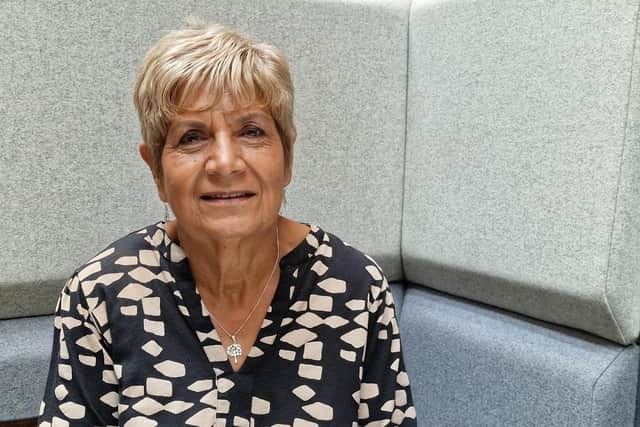

She now says more foster carers are needed in the city so children can be placed in suitable family settings, rather than costly residential placements.
She said: “Residential care is never a good outcome for a child, they are much better to be in a family setting.”
There are around 200 foster carers in Nottingham and Coun Barnard would like to see 100 more on top of that.
While she no longer fosters children owing to her role as a senior councillor, she most recently fostered a 16-year-old unaccompanied refugee from Afghanistan.
She continued: “He was an older child who did not particularly need a lot of care, but he needed that stability, that space to talk about what his worries were, about his family who were still in Afghanistan and to be able to continue his religious life and be supported in that.
“It is really important we get a range of foster care places where people feel they can open their home to a child and start to give them some stability – that is really important to children.”

There are different types of fostering that can fit with different lifestyles.
These include becoming a traditional, long-term foster carer, but also acting as a respite carer for a few weeks at a time to help out another foster carer in need of a break.
People can opt to foster older children, which can help them continue with full or part-time employment.
Mother and baby placements are another option, which Coun Barnard has done herself.
She said: “It is usually the first six months, so that when a mother and baby come out of hospital to a foster carer they are given that guidance to pick up the skills they obviously didn’t have from their upbringing and didn’t have a role model to base their parenting on.”
Recently, the ‘Mockingbird’ programme has been established in the city.
The pioneering programme aims to improve relationships between children and foster families by supporting them with a community of six to ten ‘satellite families’, also called a constellation.
It has been set up in Nottingham using funding from the Department for Education.
Coun Barnard said: “They support each other, go out on trips, the children have sleepovers at other foster carers’ homes.
“They support each other as foster carers, but it also means we can put children with more complex needs in those placements knowing the support is there.
“Where you have got that group of people it really enables us to put some of those complex children in those settings and have them well-supported, and the foster carer too, so they don’t give up on the child.”
Single or married people, aged 21 or above, and of any sexuality and background, may enquire about fostering at fosterforeastmidlands.org.uk.